In this blog, I wanted to bring several bits of research and inspiration together to help me with the production side of my video. So first of all when I was looking at my inspiration at the start of my project in these blogs Contextual Analysis- How to film workout promotional videos and Contextual Analysis- Inspiration- Personal Trainer Promotional Videos I learnt that a lot of the time they use foreground so going from behind an object and it is really effective to reveal a subject. I then have seen a filmmakers video about foreground and I wanted to piece them together as what he says in the video is some really good information on these shot types.
The filmmaker goes by the name of Daniel Schiffer and I take inspiration from him all the time as he really knows his stuff, but in this video especially he talks about using foreground so I wanted to add it into my work.
First of all, you can see all of his shots in the short film sequence are all using foreground and this is what he says makes a scene captivating because it can add both context and emotion to a scene. He specifically uses this as an example as they are all the same scene however they are shot in different ways so it creates a different picture in each shot. For example, the one with the leaves in the foreground adds some nature which gives some more context to the viewer on the environment the short film is being shot in. The shot was you are looking through the window at the woman gives you a whole new wider perspective to the close-up shot and he says it might make you feel differently about the person or scene.
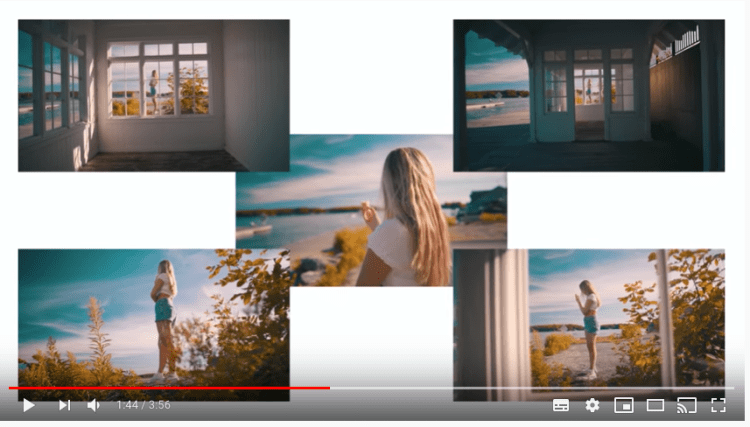
He then goes on to say adding foreground help’s with movement as it makes the movement more noticeable because there is something closer to the camera. He says you can also use foreground to reveal subject or scenes for a more dynamic shot and this is what links to my inspiration because this is what they do to make reveal people working out in the gym and it adds a different dynamic to just a standard shot, they then use this to move from one scene to another by going being a person or object and filling the screen with it as then when you start your next shot if you use a person or object with the same colours as the last shot you can easily cut these together when editing to make a seamless transition.
He then says that thinking ahead and planning your shots more is what makes a difference so for this I can go to the location and see what I can use as foreground so I know on the day of shooting.
I now want to look at some more shots that I noticed when looking at my inspiration, one of which was a sweeping shot or the fill the frame shot similar to what Daniel Schiffer discusses above but its more to move from one shot to another seamlessly. I am going to be using a video from Daniel again as he speaks about it really well. He starts off by saying the fill the frame transition is where you fill the frame with a certain colour or texture and then you start the next shot with the same colour or texture to add a seamless cut or less obvious cut. Daniel and his friend Pat say you need to make sure the shot that follows is similar or makes sense so in my case it will as I am doing a gym montage so I will just be going from one exercise to another but I also cannot do too many of these transitions in a row as you will make the viewer feel like they are on some sort of roller coaster. Pat says adding in harsh cuts in between these fill the frame transitions are good to add a different perspective and it also doesn’t throw the viewer off. They also go onto saying how important planning is as it makes it easier to know what you’re going to shoot from behind and what colours there are to shoot from so your not looking for this on set. They also say that if colours are similar but not the exact same that a slight film dissolve can be used in the cut to blend them together.
So these shots/ in-camera transitions are something I am going to practice before my shoot so I can perfect them, once I have done this I am going to plan my shots for the day so I know what objects and angles I can shoot from. In my next blog I am going to look at masking as I have said in my inspiration blog that that is one way they move from one shot to another by going behind the object like Daniel and Pat do but then in the video I watched in my inspiration they also masked another shot into this.
YouTube. 2018. Too Many Videographers Neglect This…. [online] Available at: <https://www.youtube.com/watch?v=6d_ieQpRIuE> [Accessed 17 March 2020].
YouTube. 2020. The “Fill The Frame” In-Camera Transition. [online] Available at: <https://www.youtube.com/watch?v=KwyGOh2ukv0> [Accessed 17 March 2020].
 JamieBlogs